

Is 2026 the year that eco-conscious travel becomes the norm? We really hope so! More and more people are embracing travelling without hurting the planet, so let’s keep the momentum up and make it the trend of 2026 together. Whether you have been meaning to travel more consciously for a while, you’ve just started or you’re a seasoned pro, we think there is something for everyone to learn and add to their eco suitcase here.
We have been embracing and loving eco-conscious travel for over 5 years now. We started off small and grew our habits. But even though we’ve been doing it for a while, we are still finding new ways to improve and continue to reduce our travel footprints.
We’ve shared all our tips below so that we can continue to keep up our own habits strong and to help encourage you to pick them up as well.
Start small and keep adding these habits to your eco suitcase, before you know it you won’t even have to think about being an eco-conscious traveller, you’ll just do it! You don’t have to change a lot, just be mindful and bring this new way to travel into 2026. You’ll be so glad that you did.
Be sure to check out our Instagram to see more tips for eco-conscious travel
Adventures Close To Home Are Still Adventures!
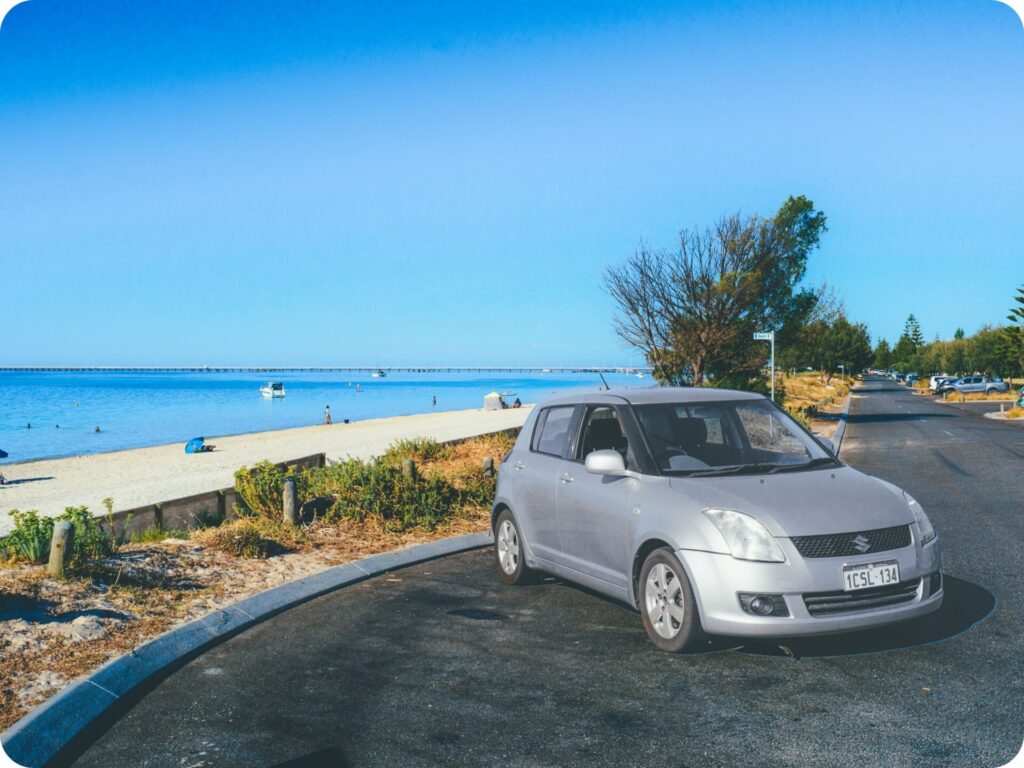
For some reason, we all see our home as a place that we can explore later, or we don’t even see it as worth exploring at all. Sure, it’s familiar and doesn’t hold the same allure as far off places and different cultures. But it is still a viable place to get out and connect with, to see the hidden corners and adventures all the tourists that come to your little slice of the world see. Don’t let anyone tell you that just because you are travelling in your home town, state or country that you aren’t really travelling.
This kind of eco-conscious travel is still a great adventure! It is also the very best way of keeping your carbon footprint down by avoiding flights. Plus, it helps keep your budget down and lets you see your home in a new light. We are spending all of this year staying in Australia. We aren’t leaving the country, and we aren’t catching any flights. We’ll still be travelling most of the year, though! Experiencing and connecting to the country we’ve called home for most of our lives (aside from 3+ years living and van-lifing in Aotearoa New Zealand). You don’t need country counts or planned flights to call it travel. All you need is to go from one place to another, the rest is up to your imagination!
Slow Down And Go With Intent
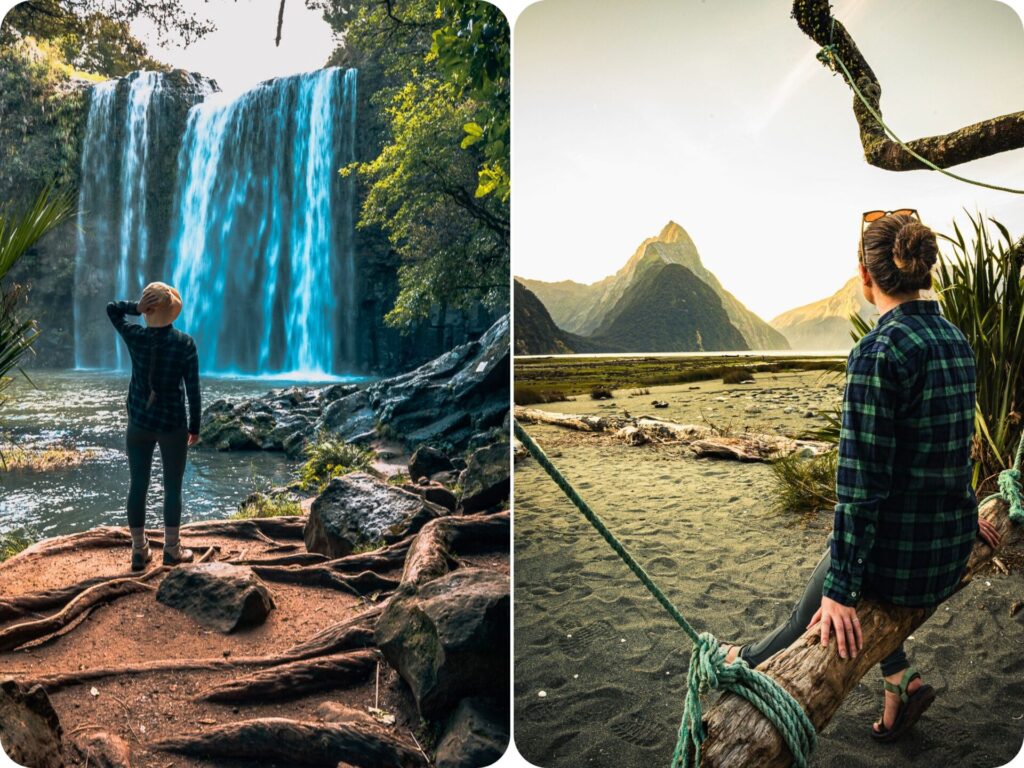
A huge part of eco-conscious travel is slowing down and travelling with mindful actions and seeking meaningful connections. Slowing your travel down doesn’t mean having to take a year off to explore one country. It just means not cramming your travel time to the point you are not experiencing the travel. Too often in the travel world, we rush through bucket lists and country counts. Trying to outdo other travellers and see it all. Well, I hate to break it to you, but you’ll never see it all. That’s perfectly ok!
You don’t need to see it all, what you do need to do is appreciate the things you do get to see. You also want to make sure the places you get to visit, and experiences you have, are ones that YOU truly want. Don’t just go somewhere because an influencer told you to, definitely don’t go somewhere just because we talk about it too! Do your research, search your intentions before searching the internet. Then explore the place you want to at a pace that suits you.
To successfully travel with intent, we need to really reframe our mindset to travel. It is a huge privilege to be able to travel. Not everyone can travel, not everyone who can travel can do it frequently or access the same places. Seeing this, and then acknowledging your own privileges, is a huge step in the right direction to changing your travel mindset.
Nathan and I are so lucky that we have the ability to shape our lives around travel, not everyone is in the same boat as us. That in itself is a huge privilege we don’t take for granted. Keeping that in mind helps us to see how lucky we are; that in turn helps us to shape our travel to respect the privilege we have. Slowing down and connecting through our travel is how we ensure our travel is meaningful to us.
Basically, don’t take your travel for granted, embrace it and all it teaches you in life. Travel for you and not for the Instagram pics you’ll get along the way. That’s not to say you can’t share it to Instagram! We certainly do! It just means you should choose where and how you travel to benefit you and not the algorithm. Don’t just do it for the gram!
Reduce Your Footprint However You Can

There are so many simple, small things you can do whilst travelling that will help to reduce your carbon footprint. Funnily enough, these are all the things you can do at home when you aren’t travelling too. It’s as simple as remembering to do them in both places. Often when we travel, we switch off. Don’t get me wrong, travel should be relaxing, but we should remember to keep our eco habits switched on when we travel.
So bring your reusables with you, things like keep cups and water-bottles should travel with you if you like to drink on the go. We carry some chopsticks with us anywhere we go in case we want to grab a bite to eat, that way we can say no to single use cutlery at markets.
Things you should turn off when on holidays:
The lights when you leave a room
The air conditioning when you aren’t in the hotel
The tap when you are brushing your teeth, washing your hair or shaving your legs
Your work emails!
Things you shouldn’t turn off when on holidays:
Your daily eco habits
Your eco mindset
Your curiosity!
Small things really do add up. Anything you can do or think of to help with your impact on the place you are visiting is worth doing. Pick up that piece of rubbish you saw, keep your eco habits going, and you’ll be on the right track to helping to keep your impact from being negative.
Try To Avoid Greenwashing And Stay At Real Sustainable Accommodation

We’ve all seen the big hotels claiming how green they are, we’ve seen little hotels doing it too. But how do you really know the place you are booking to stay at is actually doing the right thing and not just trying to seem like they are? One of the first things we notice with these hotels is whether or not they still provide those small tubes of complimentary shampoo and conditioner. If they do, then they probably aren’t doing enough to be a truly sustainable accommodation option. If we see those little single use bottles in a photo, we won’t bother doing any more research into the accommodation, we know it’s not sustainable.
If the accommodation you are looking at passes that first test, then you know it’s worth doing the research to see what else they are doing to be sustainable. If they are claiming to be a sustainable accommodation option, then they should clearly state how they are sustainable and what they are doing to become more sustainable. If we can’t easily find these answers, well usually move on to another option.
Proof of any form is crucial when checking if anything is truly sustainable. That can come from customer reviews, statistics and future plans from the actual company, as well as certification from regulators like Green Key or Earth Check. You also want to make sure the hotel is really doing its part, not just the guests.
If all the hotel does is give you a sign to not have your bed made, or your towels changed daily, then they aren’t doing enough. The responsibility to be sustainable should be more with the hotel than with the guests. If all their sustainability initiatives rely on the actions of their guests, then they aren’t a great sustainable hotel. Sadly, this does mean you will need to do some research of your own and put a little extra effort into booking a sustainable place to stay. It will take a little longer, but it feels so good when you get to your accommodation, knowing that you are staying somewhere that is doing the work.
Plan Before You Go

Just as it’s important to research the accommodation you’ll be staying at, it’s equally important to plan your holiday to be eco-friendly from the very start. Being informed is one of the biggest things we can do to ensure our travels and adventures aren’t hurting the planet. No one is travelling with the intent of negatively impacting the place, people or animals they are visiting. The negative impact happens because we aren’t even aware that we are doing it. In the space of animal encounters, we often think we are helping, when in actual fact there is a lot of hidden harm happening that we are completely oblivious to.
Animals are not made for photo ops, feeding opportunities or to be held in captivity for the sole purpose of being gazed at. If any of your encounters with animals happen in this way, no matter what the tour operator may tell you, they are unethical and harming the animal. It’s ok if you have fallen into this trap before, the marketing is clever and often aimed at making us think we are doing good. But now that we know better, we can do something about it. The same goes for all forms of travel.
Do a little bit of research, and it will go an incredibly long way into making sure you aren’t unwittingly doing harm. Listen to locals when you travel and when you are planning your travels too. If locals are calling for tourists to avoid the area for a period of time whilst they recover from natural disasters or over tourism, then please listen. You want to find that out before you get there, rather than being told by a local when you are there. So be sure to research and plan before you start booking.
We have a blog post dedicated to planning an eco-conscious trip right here to get you started, and if you’ve already planned your first trip of 2026 that’s ok too! Have a look now at what you have planned and see if you can do some research on the activities you’ll be doing and the place you are going. It may not be in your power to change everything about your trip, but you can have a look and make small changes to your booking for the better. And if you can’t change a thing, then don’t stress, you’ll know better next time, and you can still do plenty whilst you are travelling to help reduce your impact.
Travel Lightly
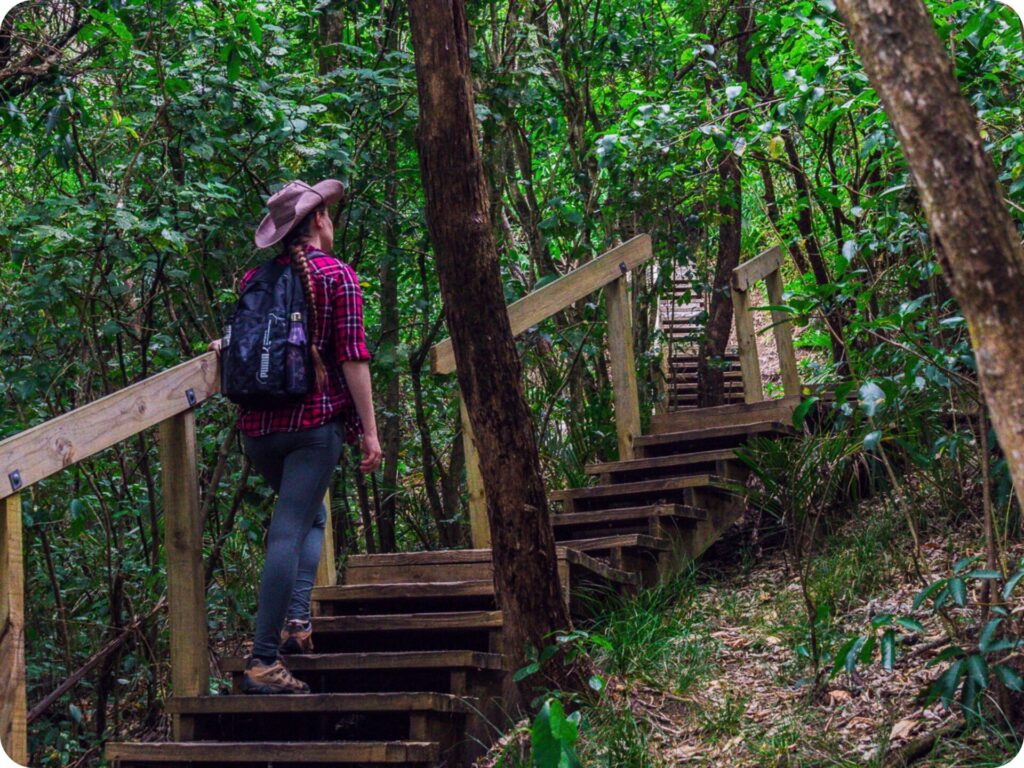
This tip is one we definitely still struggle with. Or should I say it’s one that I (Tiff) struggle with, Nathan, on the other hand, is pretty good at packing light. Maybe it has something to do with guys having less outfit options, but more likely than not it has more to do with my inability to not have a book or 3 on me at all times… it’s something I’m working on because I know that the less you take on a plane, the less of a carbon impact your flight will have. Even if your mode of transport isn’t by air, travelling lighter will always reduce your carbon footprint. Ok, maybe not so much if your mode of transport is walking, then it just literally reduces your footprint.
Travelling lightly also makes it a lot easier to lug around your luggage! No one is going to mind or even notice if you wear the same outfit twice, or thrice, or even the entire trip. Bring along comfy clothes and you’ll be set! Wear your outfit repeating like the badge of honour it is. You didn’t waste money on new clothes you didn’t need, you kept your luggage weight and carbon footprint down, and you don’t have to think too much about which new outfit to wear each day. Next cut down the number of shoes you bring even by just 1 pair, and you’ll notice the difference in your luggage weight. Then leave a book or two at home, and you’ll be travelling even lighter!
If you aren’t convinced that you can reduce what’s in your luggage, then try this when you next travel. Pack like you normally do, bring along all the shoes, clothes, toiletries, jewellery etc that you would normally take on a trip. Basically, don’t think about it anymore than usual. Then, when you are actually on the trip, take note of everything you use. Note it down in your phone, or put a little mark on the tag of your clothes and insides of your shoes. Once you get home, have a look at everything that didn’t get used. Think about why they weren’t used, and then don’t bother packing them on your next trip. Easy!
Take Home Memories, Not Plastic

We have all done it, walked into a tourist shop and seen the cutest keychains, magnets, shot glasses, t-shirts or mugs with the name of the place we are visiting on it and thought I have to get this to remember my holiday! Or even better, we’ve seen these shiny new things and thought, you know what my friend could do with?
A cute little gift from me and a reminder that I went to this destination without them…!
Whilst it’s nice that we think of our friends and wish they were with us on holidays, the actual gift definitely isn’t nice to the environment. More often than not, it’s not actually wanted, either. And the worst part? That souvenir probably wasn’t even made in the place you are purchasing it from. It’s an all-round environmental loss. An unnecessary and often not overly useful gift that will either collect dust on a shelf or get thrown in the trash pretty quickly, the money you spent on it going to some overseas conglomerate and not the local community of the place you purchased it from, and to top it off, the actual item is made from cheap materials that are harmful to the planet.
When you look at it like that, it seems like such a weird practice to purchase these souvenirs, yet the tacky souvenir industry is undoubtably thriving. The best thing you can do is avoid these all together. If you do still want to buy souvenirs, then leave the tacky tourist shops behind and wander down the street a little to a local shop, or go find a market where you can purchase handmade products from locals. Not only will the gift be eco-friendly, it will also support the local economy.
The best type of souvenir to buy, in our opinion, is a useful one. Think things like a hand made serving bowl, a crafted item of clothing like a scarf or hat, a book written by a local author sold by the local indie bookshop (yes this is Tiff’s favourite souvenir) or some locally made edible treats. We do also love some locally made art work too, one could argue this is also a useful souvenir as it brings joy to all who look at it. Either way, if you do want a souvenir that is tangible and not just your photos or your junk journal (another great eco way to remember a trip) make sure you check it was locally made and sold by a locally owned shop.
Support Local!
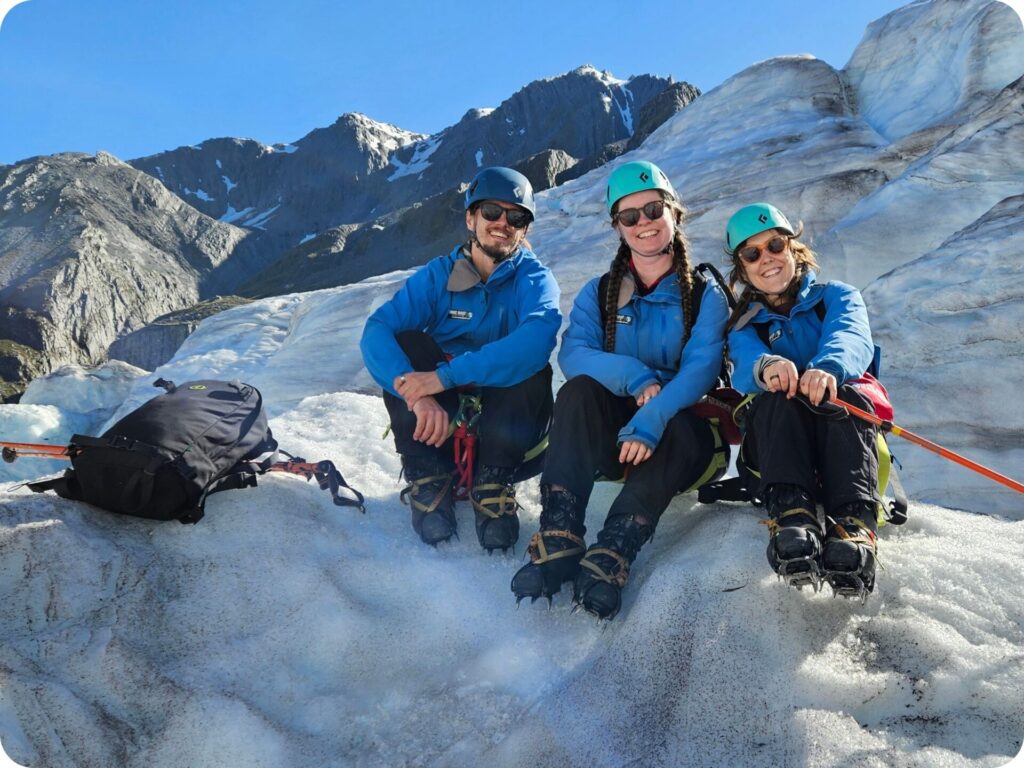
In case you haven’t gotten the hint yet, supporting local is super important when you travel, not just for buying keepsakes to take home, but for your entire time travelling. The more local places you can shop, eat and stay at, the better. Your money will be going directly back into the local community instead of a lot of it going offshore to international conglomerates. Generally speaking, local establishments are more environmentally friendly, simply because they have a larger stake in the environment they exist in thriving. Local restaurants and eateries are more likely to be sourcing their ingredients from local farms and vendors, too. This means the food you are eating is fresher and has less of a carbon footprint than imported products.
Seek out locally run hotels, bed and breakfasts or home stays. The best way to ensure the money you pay to stay at these places goes directly back to the owners and local economy is to book direct. We like to use websites like booking.com and Airbnb as a way of finding these places and then use the external links to book direct through the hotel or owner of the bnb. As for Airbnb, if you are going to use this, it’s really important to stay at places where you are renting a room or part of someone’s house, not an entire standalone house. Often entire houses aren’t owned by local people but by investors, use of these houses for Airbnb is driving up housing prices in some areas of the world and keeping residents out of the housing market and reducing the number of rentals on offer. So be sure to do your research if you are going to stay in a stand alone Airbnb or just avoid them all together like we do. Staying with locals is such an amazing way of getting to connect with others, and you get some great local tips on what to see and do whilst you are there!
We have gotten so many great recommendations from local shop owners and bnb hosts over our years. From the best places to eat, hidden gems you won’t find on any travel blogs (including ours, sorry not sorry!) and when something is a tourist trap and not worth doing. So seek out local people in any way you can whilst you travel. Another great way of doing that is to go on tours run by locals. Whether it’s a walking tour around a city, or a full on epic adventure climbing a glacier. The local tour guides always do it better. The locally run tours are almost always more insightful and help to give you a better connection and understanding of the place and people you are visiting. Supporting local is the easiest way to find meaning and connection on your travels, too.
Make It Sustainable For You

There is no point in planning an eco-friendly holiday if it isn’t the holiday you want. I know I’ve mentioned this already, but it is really important to not fall into the trap of doing things because others say to do it. This won’t help you to sustain the change or enjoy the holiday. If hiking isn’t your thing, don’t go adding it into your itinerary just because it’s celebrated as a great sustainable travel activity. You need to seek out the adventures that excite you and find ways to turn those into eco-friendly trips.
If you love visiting new cities, then do that! But choose a method of transport that makes it eco-friendly, maybe you plan a trip to 5 different cities that are all connected by a train line instead of visiting them with a flight. Perhaps flying is the only way of getting to those cities so you choose to explore them by foot once you get there, instead of catching taxis and Ubers all over the place.
If your favourite thing about travel is seeing new animals and having wildlife encounters, then be sure to do this in an eco-friendly manner that doesn’t result in harm to the wildlife you’d like to see. That means choosing tours run by locals with the chance of seeing animals in the wild, rather than going to a place where animals are held in captivity and exploited for photo ops and patting sessions.
However, you like to travel, there is a way to do it with the planet and local people in mind. No one wants to harm either of these things, unfortunately, sometimes this just happens as a byproduct of our lack of understanding. If you have a way you love to travel and don’t know how to make it more eco-conscious after reading this blog post, then send us a message and well help you to figure it out!
Carbon Offsetting

This is the last point for a reason. Whilst carbon offsetting definitely has its place, it shouldn’t be your first point of call to make your travel sustainable. It shouldn’t even be your second or third or fourth… well, you get the point. We like to think of it as a nice little garnish on the top of our travel salad, or ice cream, depending on your preferences. Adding it on makes for a better experience, but it wouldn’t make a good meal all on its own.
As with any type of sustainable travel actions, it’s really important to do your own research when finding the right carbon offsetting for you. Don’t just rely on the ones offered by airlines, as not all carbon offset programs are created the same. We firmly believe that it’s important to fund carbon offsetting projects in either the country you are visiting or your country of residence.
We choose to use an Australian carbon offsetting venture for this very reason. We have done our research and decided that Carbon Positive Australia is the right fit for us. Not only do they plant Australian native trees to restore landscapes to their natural habit, they also support community planting projects and native animal protection. They have a super easy interface where you can calculate your carbon emissions or choose pre-calculated options if you are short on time.
When we were living and travelling in Aotearoa New Zealand we used a local NZ company as our carbon offset. Sadly, they went under just as we left the country so we can’t link to them anymore. But it was nice to support offsetting in the country we were travelling in at the time. As we venture further afield in our future travels, we will be looking out for the best carbon offset options abroad, too.
We Hope These Tips Guide You Toward More Eco-Conscious Travel in 2026
If all of these tips for eco travel seem a little overwhelming, don’t stress! You are certainly not alone. We didn’t start off doing every single one of these things when we travelled. In fact, on our very first few trips as a couple, we basically did the opposite of all of this! We crammed in as much as we could, to the point where we couldn’t even do everything on our daily itinerary. We took plane flights without even thinking about the carbon emissions we were creating, and we loved to get a tacky magnet or keychain souvenir.
All that to say it takes time to develop these eco habits and its ok to start off small, it’s encouraged even. Choose one or two of these tips to implement on your next trip. Once you know you can do those, pick another eco habit to add to your travelling. Before you know it, you’ll be doing all of them and finding new ways to travel in an eco-conscious manner too! It’s all about small steps leading to long-lasting change. If we can do it, so can you. Together, we can make eco travel the new trend in 2026!
Keen for more inspo? Be sure to check out:
- How Eco-Friendly is Vanlife?
- 10 Anxiety Hacks for a Smooth Flight
- 10 Hidden Gem South Island Photography Spots



I couldn’t agree more with all of these, and you’re perfectly right in saying that it takes time to learn and implement these practices- although it is so worth it. I aim to plan a bit better this year, by finding out about the place, finding locally run activities before visiting, and ensuring the accommodation is sustainable. Although I can be really bad at planning.
We’re glad you enjoyed the blog post! They sound like some great goals to be implementing this year.
Planning to plan is a great first step so you’re already off to a great start 😂